The HEPA Story
The Air Force strategically avoided Hawaii's environmental review law through project modification. The approach avoids the community's primary regulatory protection, Hawaii Environmental Policy Act (HEPA). The avoidance appears as institutional defiance of public input. It also undermines state mechanisms and county council decision-making link.
What is HEPA?
The Hawaii Environmental Policy Act (HEPA) is Hawaii's state-level equivalent to the federal NEPA. It provides an additional layer of scrutiny, with particular attention to cultural and environmental resources unique to the islands.
HEPA applies to federal actions when they require state or county permits or approvals. For a site like Haleakalā, HEPA is a critical safeguard for indigenous rights and island ecology.
Strategic Modification
Originally, the AMOS STAR project design required several state permits, which would have triggered HEPA review. The Air Force subsequently modified the design specifically to circumvent these requirements by using existing corridors. We reject the notion that this is a valid modification because the entire site footprint, access, waste and wider impacts will fall into state regions of interest and ultimately into state jurisdiction.
Circumvention Tactics
- •Altered construction to avoid state building permits
- •Modified site development to bypass county approval
- •Restructured to claim exclusive federal jurisdiction
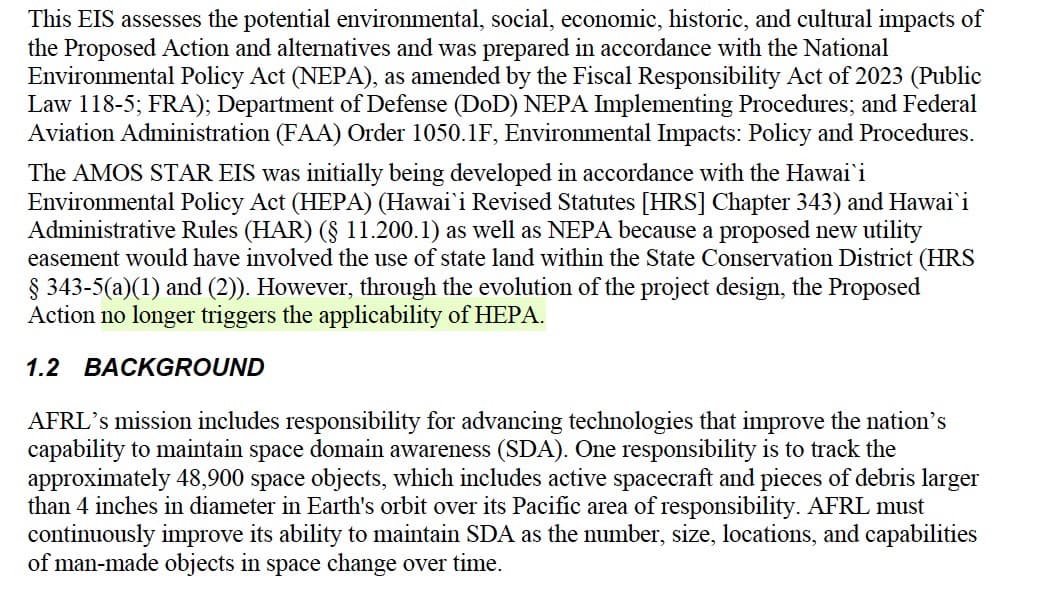
"This represents a deliberate avoidance strategy to minimize oversight of a project affecting sacred land."
The Consequences of Avoidance
Avoiding State Law is a pattern of defiance that undermines the public's right to know and participate in decisions that affect their communities. It also undermines the integrity of the regulatory process and the rule of law - ʻAʻole maikaʻi.
Lost State Perspective
HEPA would have brought state-level expertise on Hawaii's unique cultural resources into the review process.
Reduced Participation
HEPA provides additional public involvement opportunities. Avoiding it limited the voice of Hawaii residents.
Pattern of Avoidance
Strategic modification demonstrates a pattern of minimizing oversight rather than embracing transparency.
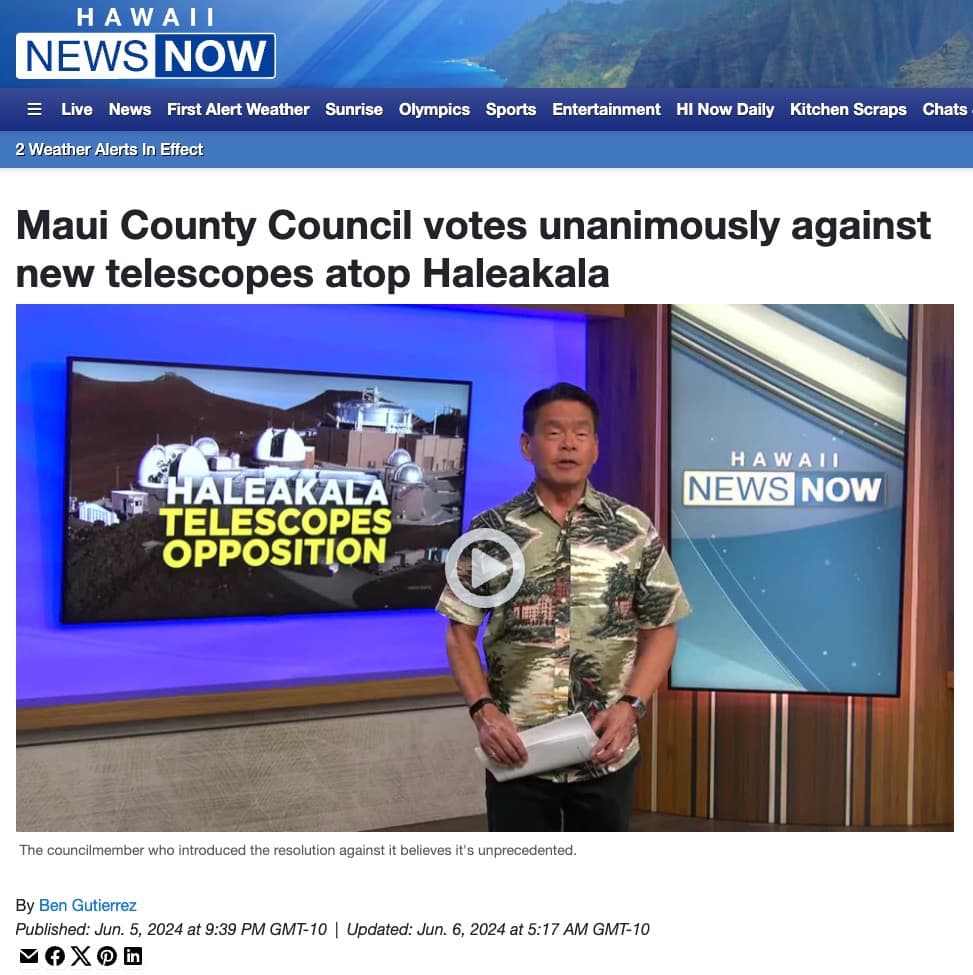
Watch the Coverage of the Maui County Council Meeting where they voted unanimously against the project.link