Protect Haleakalā Community Collective | October 22, 2026
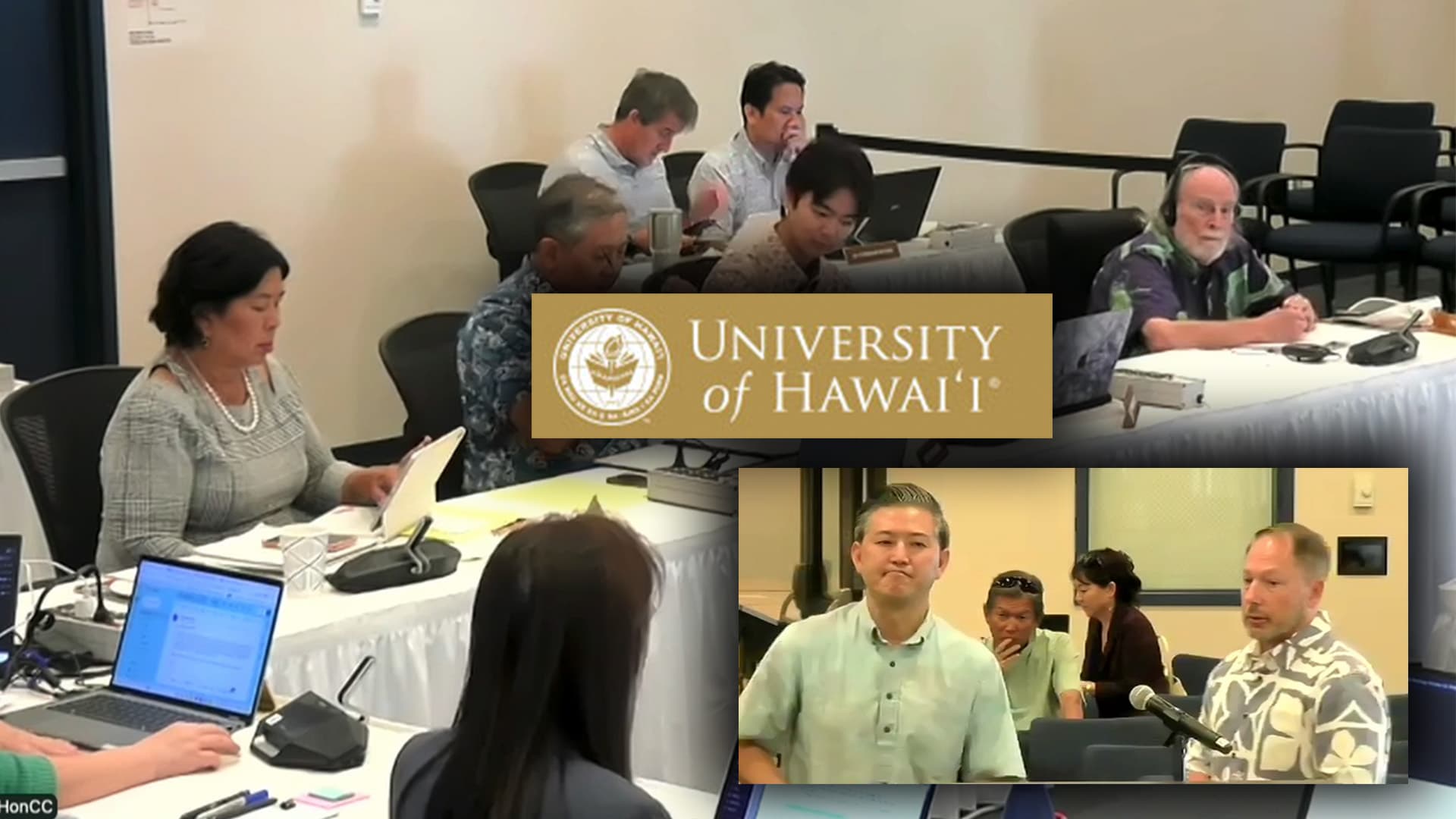
Our team has been attending University of Hawaiʻi Board of Regents meetings, in person on Oʻahu and online, to represent Maui community and Protect Haleakalā perspectives on new UH agreements for space at the Maui Research and Technology Center in Kīhei. That space houses the Maui High Performance Computing Center (MHPCC), which UH itself describes in writing as “the supercomputing program of AMOS.”
Why This Matters
The Maui County Council voted unanimously to oppose AMOS STAR (Resolution 24-103), and about 89% of public scoping comments opposed the project. UH says this lease is unrelated to AMOS STAR. Before the vote, we asked UH to confirm that in writing: that MHPCC will not process, store, or support data or operations for AMOS STAR.
That confirmation never came.
What Happened
On October 22, at Honolulu Community College, the Board approved the agreements 11-0. The agreements run five years, with an option to extend one building’s lease to 2036.
The questions in our October 21 letter were not answered, and the Board did not address the County Council’s resolution or the community’s opposition before voting.
What Concerned Us
No evidence of community benefit
When a Regent asked what jobs and internships MHPCC has provided, UH’s Vice President said he was “not familiar with the contract itself” and did not know the number of internships. The only figure offered was a Regent’s estimate of “the dozens, maybe.”
Confusion over AMOS
In writing, UH says MHPCC is part of AMOS but unrelated to AMOS STAR. At the meeting, the Vice President told the Board: “the AMOS project is entirely a project of the Air Force. It is not related to the AMOS project.” The distinction UH’s own position depends on was lost, and the Board voted on that record.
No environmental review
UH confirmed that no environmental assessment has been done for the facility in more than 20 years of operation.
How the Regents Voted
All voted yes:
- Lauren Akitake (Chair, Maui County)
- Gabriel Lee (First Vice Chair)
- Keith Amemiya (Second Vice Chair)
- Neil Abercrombie
- Makai Freitas
- Eric Pōmaikaʻi Gee (Student Regent)
- Marie Laderta
- Laurel Loo
- Mike Miyahira
- Laurie Tochiki
- Keola Robert Whittaker
A decision about a Maui facility, in a Maui community, was made in an Oʻahu boardroom, without answers to the questions Maui people asked. When the people affected are not in the room, their questions are easy to leave unanswered.
Full Coverage
The transcript from our recording and our analysis follow below.
21 October Letter
Aloha Vice President Christ,
Mahalo for your reply of October 14 and for sharing it with the Board of Regents. Your answers confirmed two important points: MHPCC “is the supercomputing program of AMOS,” and the Building B lease is paid for entirely through the University’s federal MHPCC contracts.
We are writing to follow up on two issues: the Air Force language that describes this facility, and the future use of Building 590.
Part 1: What the Air Force Documents Actually Say
The Air Force’s planning documents use technical terms that make it hard to see how the pieces connect. In plain language:
- “Detachment 15 AFRL” is the Air Force Research Laboratory’s Maui unit, which the Air Force describes as “a unit of the U.S. Space Force” (SISL Draft EA, cover letter).
- “AMOS” is the umbrella name for the Air Force’s telescopes on Haleakalā and its offices and computing in Kīhei.
- “MSSC” is the Air Force telescope complex on the summit of Haleakalā.
- “High-speed fiber optic links” are the dedicated data cables that connect the summit telescopes directly to the Kīhei facilities (SISL Draft EA §1.2, p. 1-1).
- “Other supporting operations” is how the Air Force describes MHPCC: one of the facilities that supports its Haleakalā work (§1.2, p. 1-1).
- “SISL” (Secure Integration Support Laboratory) is a new, secure Air Force building planned for the same Kīhei technology park. It would hold offices, classified areas, a high-performance data center, and a “remote telescope operations center,” meaning a room where the summit telescopes are controlled from sea level (§2.1, p. 2-1).
- “Consolidate” means moving these separate facilities into that one new building (§1.3, p. 1-1).
Put plainly, the Air Force’s own documents describe one connected system: telescopes on the summit, linked by cable to computing and control facilities in Kīhei, under one military unit. MHPCC is part of that system by the Air Force’s description and by the University’s own answer.
Our primary request: your reply states that “this lease is unrelated to the proposed AMOS STAR project.” We ask the University to confirm in writing, before the Board acts, that during the lease term and any extension, MHPCC will not process, store, relay, or provide computing support for data or operations of the proposed AMOS STAR facility because of significant harm to the community, documented community opposition, Maui County Council resolution 24-103 and lack of clarity around use (as explained above).
Part 2: The Future Use of Building 590
Mahalo for clarifying that the University, not the Air Force, holds the lease at 590 Līpoa Parkway. The Air Force’s plan for that building, however, appears to differ from what the Board has been told.
What the University told the Board:
- The University seeks a five-year lease, with an option for five more, running potentially to 2036 (Materials, p. 17).
- “No alternative location on Maui” provides the data center environment MHPCC needs (Materials, pp. 9-10).
What the Air Force’s 2022 SISL Draft EA says:
- Its map of “AFRL Facilities on Maui” shows the “MHPCC Data Center” at the technology park (Figure 1-1, p. 1-2).
- It lists a “data center (building 590)” as one of the four Air Force facilities SISL would replace (§2.1, p. 2-1).
- Once SISL is built, staff and equipment would move, and the leases for “buildings 550 and 590” would be ended (§2.1, p. 2-2).
- SISL would have its own high-performance data center (§2.1, p. 2-1).
- The Air Force counts these four sites as costing it about $1.4 million a year in leases (§4.10.3, p. 4-19).
The lease terms also allow for a change in who uses the building:
- The lease can be handed over to the federal government, or a successor, if they become MHPCC’s prime contractor (Materials, p. 17).
- The University can end the lease early if it is no longer prime contractor or if federal funding is cut (p. 17).
We ask the University to confirm with its federal sponsor and answer on the public record:
- Is the “data center (building 590)” in the Air Force’s SISL plan the same MHPCC space at MRTC Building B?
- If SISL is built, will MHPCC computing equipment move there, and what would happen to the University’s lease?
- Could the lease be handed over to the federal government during its term, and if so, what would Building 590 then be used for?
- How is a lease running potentially to 2036 consistent with the statement to the Board that no alternative location exists, when the Air Force plans a replacement data center at the same park?
Other Open Items
- Electricity. Is the 400-450 kW figure total demand or net draw from the grid after on-site solar? What was MHPCC’s annual electricity use in kWh over the most recent twelve months?
- Local benefit. How many MHPCC and MSTARS positions are held by Maui residents? How many internships, including for UH Maui College students, has the program provided in the past three years?
- Community position. Our question of whether the Board has weighed the Maui County Council’s unanimous opposition to AMOS STAR (Resolution 24-103) and the community’s scoping comments remains open. We respectfully ask that the Board address it when it takes up this item.
Mahalo nui,
Protect Haleakalā Community Collective
Email sent Tuesday 22 October 2026
Aloha Chair and Members of the Board of Regents,
We recorded the Board’s October 22 discussion of Item V.A.5, the University’s agreements with the Hawaiʻi Technology Development Corporation for space at the Maui Research and Technology Center, and have verified our transcript against the audio. Timestamps below refer to our recording.
This letter sets out how the presentation to the Board narrowed the connection between these agreements and the federal enterprise they serve, and asks the Board for one action.
1. What the University Had Already Stated in Writing
In his October 14 reply to us, provided to the Board, Vice President Christ wrote that “MHPCC is the supercomputing program of AMOS,” that UH has operated MHPCC “as part of the AMOS site since 2001,” and that the building has been leased “with all expenses covered by federal funds provided to UH through its MHPCC contracts.” The Air Force’s January 2026 Draft Environmental Impact Statement likewise lists MHPCC as one of the facilities that make up AMOS (§1.2, p. 1-1).
2. What the Board Heard from the Administration
a) AMOS and AMOS STAR were collapsed into one term (3:05):
“So the AMOS project is entirely a project of the Air Force. It is not related to the AMOS project.”
The University’s written position distinguishes AMOS, which includes MHPCC, from AMOS STAR, the proposed telescope project. As spoken, that distinction was lost. The Board heard that the lease is “not related” to AMOS, the opposite of what the University had put in writing.
b) A shared chain of command was conceded, then set aside (3:05):
“the directorate that controls the AFRL, as well as the MHPCC, [...] also is the one proposing the AMOS project, but they are not related in terms of what they do.”
Only function was addressed. Control, contracts, funding, facilities, and data were not.
c) The MSTARS contract was placed out of scope, then confirmed as the basis of the lease:
At 6:30: “the request before the Board today is specific to the MHPCC lease. It is not about the MSTARS contract.”
At 13:39, Regent Liu asked whether the University would be in violation of the MSTARS contract if it did not provide a lease base. The answer: “There is, I think, potential.”
At 15:51, the administration explained that the intent was “to match the lease with the option to extend” to the five-year MSTARS award.
d) Only our first set of questions was answered:
At 1:17, the administration stated: “we received a set of questions, which we did respond last Wednesday,” referring to its October 14 reply. Our October 21 letter was in the Board’s testimony, yet none of its questions were addressed at the meeting, including:
- Our primary request: written confirmation that MHPCC will not process, store, relay, or provide computing support for data or operations of the proposed AMOS STAR facility.
- Whether the “data center (building 590)” that the Air Force’s 2022 SISL Draft Environmental Assessment plans to replace (§2.1, pp. 2-1 to 2-2) is the MHPCC space at MRTC Building B. At 6:11, the administration repeated its October 14 answer without addressing the Assessment.
- Annual electricity use in kWh, and whether the stated figure is net of on-site solar.
- The number of Maui residents employed and internships provided.
e) No evidence of community benefit was offered:
Regent Gee asked what jobs and internships have been provided, and whether anything in the contract guarantees them (7:10). The administration replied: “I’m not familiar with the contract itself” (7:24) and “I don’t know the number of internships” (7:56). The University’s October 14 written reply likewise lists “internship opportunities for students” and “high-quality jobs for Maui residents” as community benefits, without a single figure.
3. What the Board Heard from Regent Abercrombie
Regent Abercrombie disclosed his role in establishing the program in the 1990s (9:32 to 10:48) and stated that he had read all testimony “right up and including that which has been submitted earlier, last night or earlier today” (12:09). He then described the administration’s presentation as one that “accurately and incisively and comprehensively” answers the legitimate questions raised (12:35), and moved approval (20:21).
At that point, the questions in our October 21 letter had not been answered.
Regent Abercrombie also told the Board that the “telescope configurations” on Haleakalā are essential to “the research mission and infrastructure necessary to carry out that mission” (11:27). That is the connection the administration’s presentation had just set aside.
Regent Abercrombie also offered the only estimate the Board heard: “I don’t know the exact number, but it’s [...] in the dozens, maybe [...] more than that, over the past 20 years.” No documentation was provided to support it.
“Maybe”?
4. How the Board Framed Its Decision
Regent Whitaker confirmed with the administration that the agreements are between UH and HTDC and that the federal government is not a party to them (15:07 to 15:30). That is correct today. The lease terms, however, allow the lease to be handed over to the federal government or a successor if they become MHPCC’s prime contractor (Materials, p. 17).
The administration also stated that no environmental assessment or impact statement has been prepared for the facility (8:28 to 8:39), and that Board review of this item was triggered by the amount of rent (9:16).
The Board approved the agreements 11-0 on this record.
Our Request
We ask the Board to direct the administration to answer our October 21 letter in writing, and to enter those answers into the record of Item V.A.5 before the minutes of the October 22 meeting are approved.
Mahalo nui,
Protect Haleakalā Community Collective